ServicesReverse Osmosis
Reverse Osmosis Systems in Seabrook
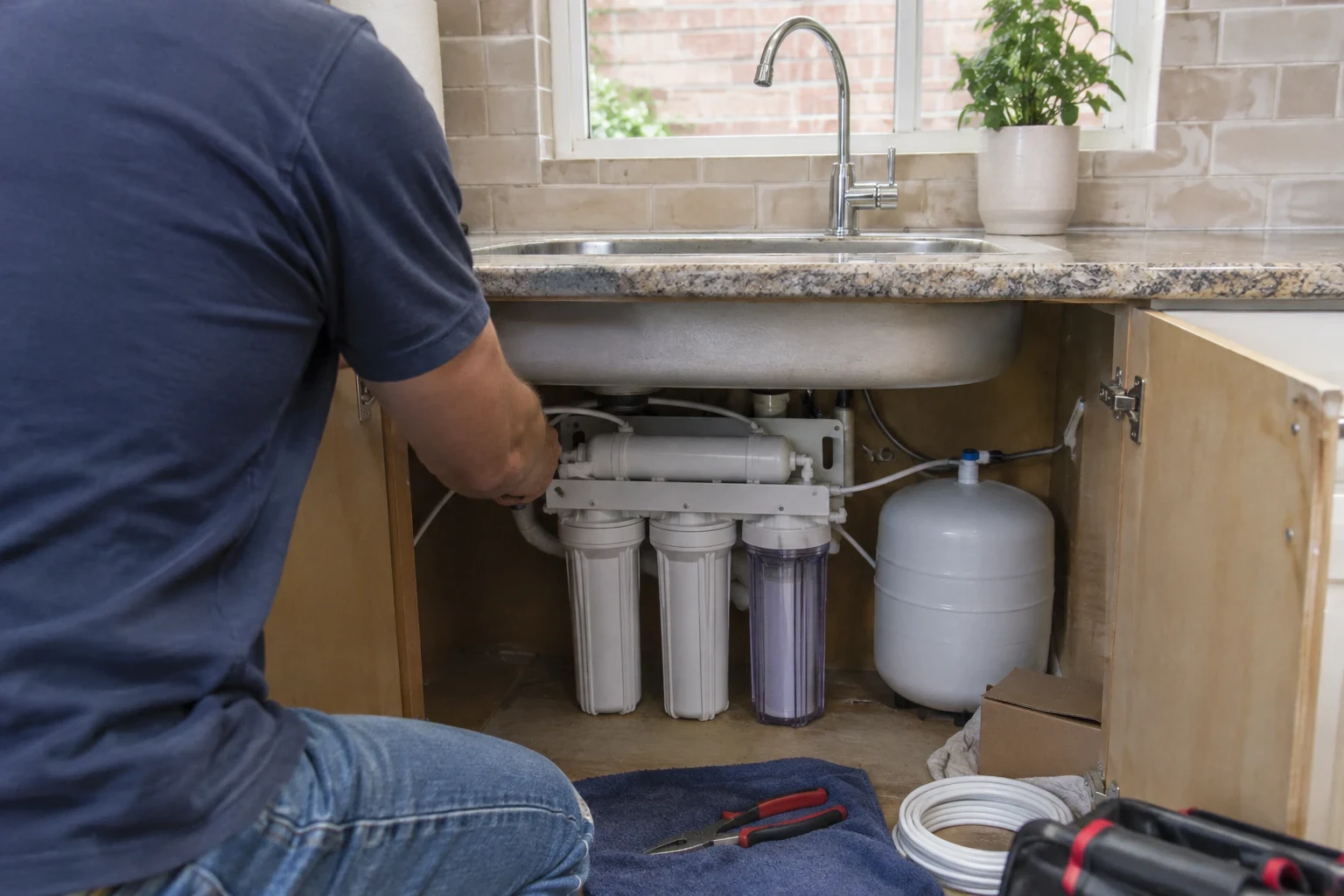
A reverse osmosis system sits under your kitchen sink and sends water through several filter stages and a membrane fine enough to hold back dissolved salts, lead and nitrates. We explain each stage, test your water first and install a system sized to how your home uses it.
What reverse osmosis does, in plain terms
Water pressure from your supply line pushes water against a thin-film composite membrane. Water molecules pass through. Most dissolved material does not, and it is rinsed to the drain. What comes out the other side goes to a small pressurized tank and then to a separate faucet at your sink.
An RO system works at a single spot in your home, usually the kitchen sink. Only the water for drinking and cooking passes through it. Your shower, laundry and dishwasher keep getting the same supply as before. So if the complaint is chlorine smell in the bathroom or scale on fixtures, whole-home filtration or a water softener solves it better, and we will say that up front.
It is the right call when you want to stop buying bottled water, when your home has older plumbing and you are thinking about lead, or when a test shows dissolved solids, nitrates or fluoride you would rather not drink.
What comes with an RO install
- Sediment prefilter
- A polypropylene cartridge catches sand, rust and grit first. This keeps particles from clogging the carbon and the membrane downstream.
- Carbon block prefilter
- Chlorine and chloramine break down the membrane material over time. The carbon stage removes them before water reaches the membrane, which protects it and improves taste.
- The membrane and storage tank
- The membrane does the heavy lifting. Because it produces water slowly, a bladder tank under the sink stores filtered water so a full glass or pot fills at normal speed.
- Polishing filter and faucet
- A final carbon cartridge picks up any taste the tank adds. Water exits through a dedicated faucet mounted on the sink deck or countertop.
- Drain connection with air gap
- Reject water runs to a drain saddle on your sink drain. An air gap keeps drain water from ever siphoning back toward the system.
- Ongoing service
- We offer full services after the sale, so filter changes, membrane checks and questions down the road come back to us.
Signs an RO system makes sense for your home
You buy cases of bottled water
When the whole family skips the kitchen tap and reaches for plastic bottles instead, a dedicated RO faucet typically takes over that job, along with the hauling from the store.
Your home was plumbed before 1986
Lead solder was common in copper plumbing before the national ban. Reverse osmosis is one of the most effective ways to reduce lead before you drink it.
Chalky film after boiling
A pale scale inside the electric kettle or the coffee pot is mineral left behind as water evaporates. High dissolved solids also leave spots on glassware and make ice cubes cloudy.
A test flagged nitrates, arsenic or fluoride
Carbon alone does little for these. A membrane reduces all of them, which is why we often pair RO with well water treatment.
The tap water tastes off
A chemical or metallic taste often comes from disinfectant or the pipes in your home, and the carbon stages handle most of it.
What moves the price of an RO system
We offer free installation, so the price comes down mostly to the equipment your water calls for. We give you the quote by phone after we know your test results and how your kitchen is set up. Nothing gets added without explaining why first.
Number of stages
A standard system has four or five stages. A remineralization stage, which adds back calcium and magnesium, adds a cartridge. If higher pH is your goal, our alkaline water systems page explains that option.
Your water pressure
Low incoming pressure means slower production and more water sent to the drain. A permeate or booster pump fixes it but adds parts.
Pretreatment
Hard water or high iron can foul a membrane in months. If the test shows it, a softener or iron filter ahead of the RO protects your investment.
Extra connections and countertop
Running a line to the refrigerator or ice maker adds tubing and fittings. Drilling quartz or granite for the faucet takes a diamond bit and more care than a sink with a spare hole.
How the job runs
- 1
A conversation by phone
You describe what you dislike in your water and where the sink, cabinet and refrigerator sit. We explain what an RO system would fix and what it would leave alone.
- 2
Test before we recommend
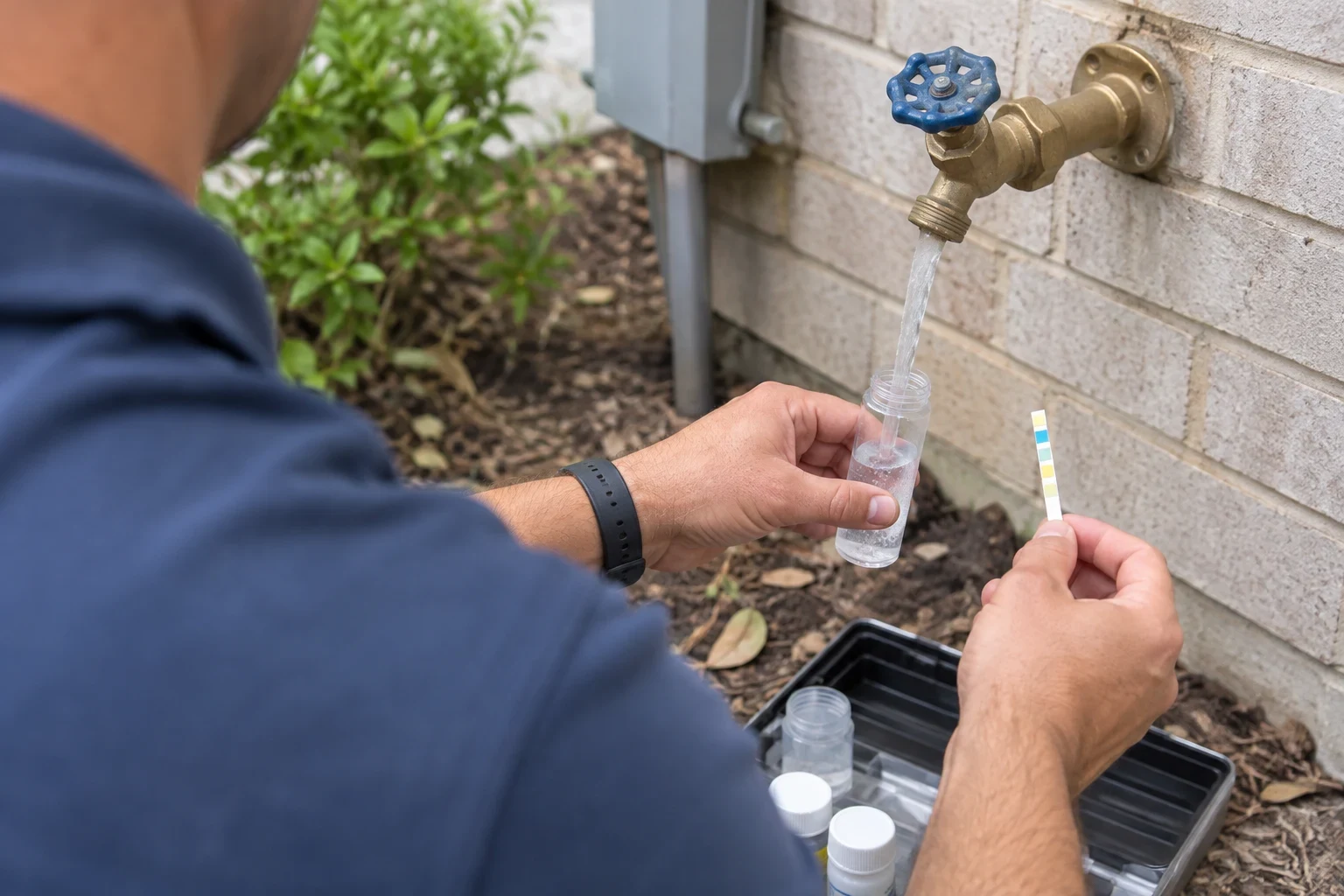
We check total dissolved solids, hardness, chlorine and your water pressure. Very hard water shortens membrane life, and pressure under about 40 psi slows output, so these numbers decide whether you need a softener or a booster pump. Our water testing page covers the details.
- 3
Installation under your sink
We shut off the cold line, add a feed valve, mount the faucet, connect the drain saddle and set the tank. Most installs fit inside a standard sink cabinet.
- 4
Flush, measure and walk through
We sanitize and flush the system, then measure dissolved solids before and after so you see the drop. Before we leave, we point out each housing under the sink, label what it filters and go over the replacement schedule for every stage.
Reverse osmosis questions we hear most
How much water does an RO system send down the drain?
Every system rejects some water to rinse the membrane. The amount depends on the membrane design and your water pressure. Higher pressure and a permeate pump both cut waste noticeably, and we check your pressure before choosing equipment.
Does it remove the healthy minerals too?
Yes. The membrane strips out most dissolved minerals along with the contaminants. For most people, food supplies far more of those minerals than drinking water does. If you like the taste of mineral-bearing water, a remineralization cartridge returns some calcium and magnesium after the membrane.
When do the cartridges get replaced?
The sediment, carbon and polishing cartridges typically go about a year, less if your water carries a lot of grit or hardness. The membrane outlasts them, often by several years. A quick dissolved solids reading shows when it is wearing out, and that service comes back to us.
Is there a warranty on the system?
Yes. Our reverse osmosis systems come with a lifetime warranty. We will go over what it covers when we talk by phone.
Will the RO water reach my fridge dispenser and ice maker too?
In most kitchens it can. A length of food-grade tubing branches off the RO tank and ties into the refrigerator supply. The dispenser then pours the same membrane-filtered water as the sink faucet, and ice cubes freeze clearer because fewer dissolved solids get trapped inside.
Find out if reverse osmosis fits your water
Describe the taste, the spotting or the test result that has you wondering, and we will lay out what a membrane system would actually change. You learn the parts, the filter schedule and the price before anything goes under your sink.