ServicesWell Water Treatment
Well Water Treatment in Seabrook
Orange stains, a rotten-egg smell or grit in the aerator each point to a different cause in a private well. We test your water, explain what each number means, and install only the equipment that treats what we actually found.
What well water treatment actually does
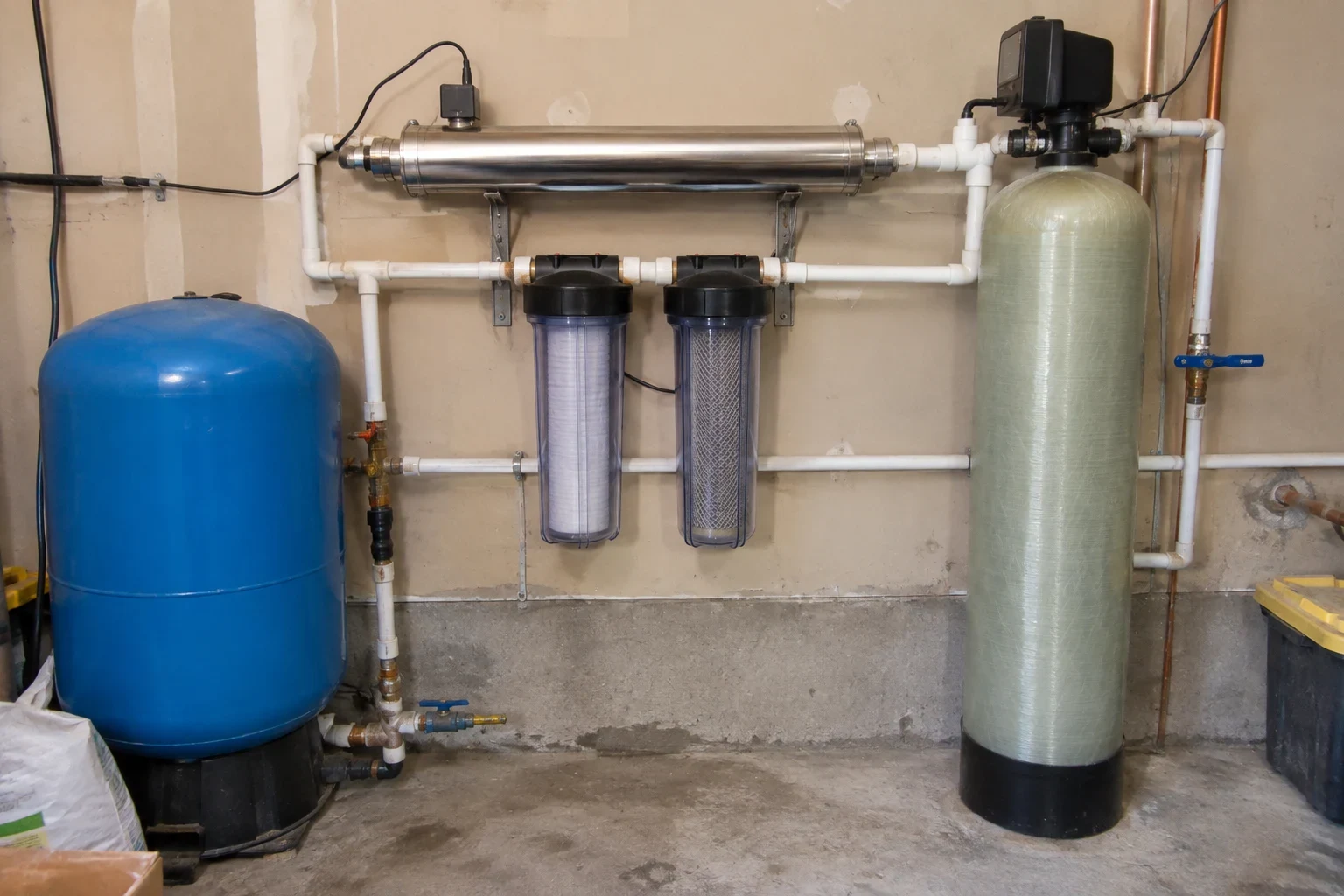
A private well has no utility treating or testing the water before it reaches your tap. Whatever the ground puts into it, dissolved iron, manganese, hydrogen sulfide gas, sand or bacteria, comes straight into your home. Treatment is a short chain of equipment installed where the line leaves the pressure tank, with each stage aimed at one problem.
The order of that chain matters. Sediment has to come out before an iron filter, or the media bed clogs. Iron and color have to come out before a UV lamp, or the light cannot reach the bacteria it is meant to kill. We explain why each stage sits where it does, so you know what you are paying for and what each part is doing.
What we install and why
Sediment prefiltration
A spin-down screen or cartridge housing catches sand and silt from the well. It protects every stage after it and keeps fixture valves from wearing early.
Iron, manganese and sulfur removal
Dissolved iron is clear when it leaves the well and turns orange once it meets air. An air-injection oxidizing filter forces that change inside the tank, then traps the particles in a media bed that backwashes itself on a timer. The same process breaks down hydrogen sulfide, the gas behind the rotten-egg smell.
UV disinfection
A UV lamp inside a quartz sleeve exposes every gallon to light that stops coliform and other bacteria from reproducing. It adds no chemicals and changes nothing about taste.
pH correction
Acidic well water slowly dissolves copper pipe and leaves blue-green stains. A calcite neutralizer raises the pH so the water stops eating the plumbing.
Add-on stages when tests call for them
If hardness is high, a softener can follow the iron filter. For drinking water, an under-sink reverse osmosis unit handles what is left at one tap.
Signs your well needs treatment
- Orange or rust stains
- Stains in toilets, tubs and on laundry usually mean ferrous iron is oxidizing after it leaves the tap.
- Black or brown specks
- Dark residue in fixtures or on dishes typically points to manganese, which often travels with iron.
- A rotten-egg smell
- Odor at every tap means hydrogen sulfide in the well. Odor only from hot water often means the water heater's magnesium anode rod is reacting, which is a different fix and one we will tell you about.
- Cloudy water after a storm
- Heavy Gulf Coast rain and flooding can push surface water into a wellhead. Cloudiness or a change in taste afterward is a reason to test for bacteria.
- Grit and worn fixtures
- Sand in aerators or toilet fill valves that keep failing usually means sediment is getting past the well screen.
How a well treatment job runs
- 1
A conversation by phone
You tell us what you see, smell and taste, plus what you know about the well. That narrows down what we need to test.
- 2
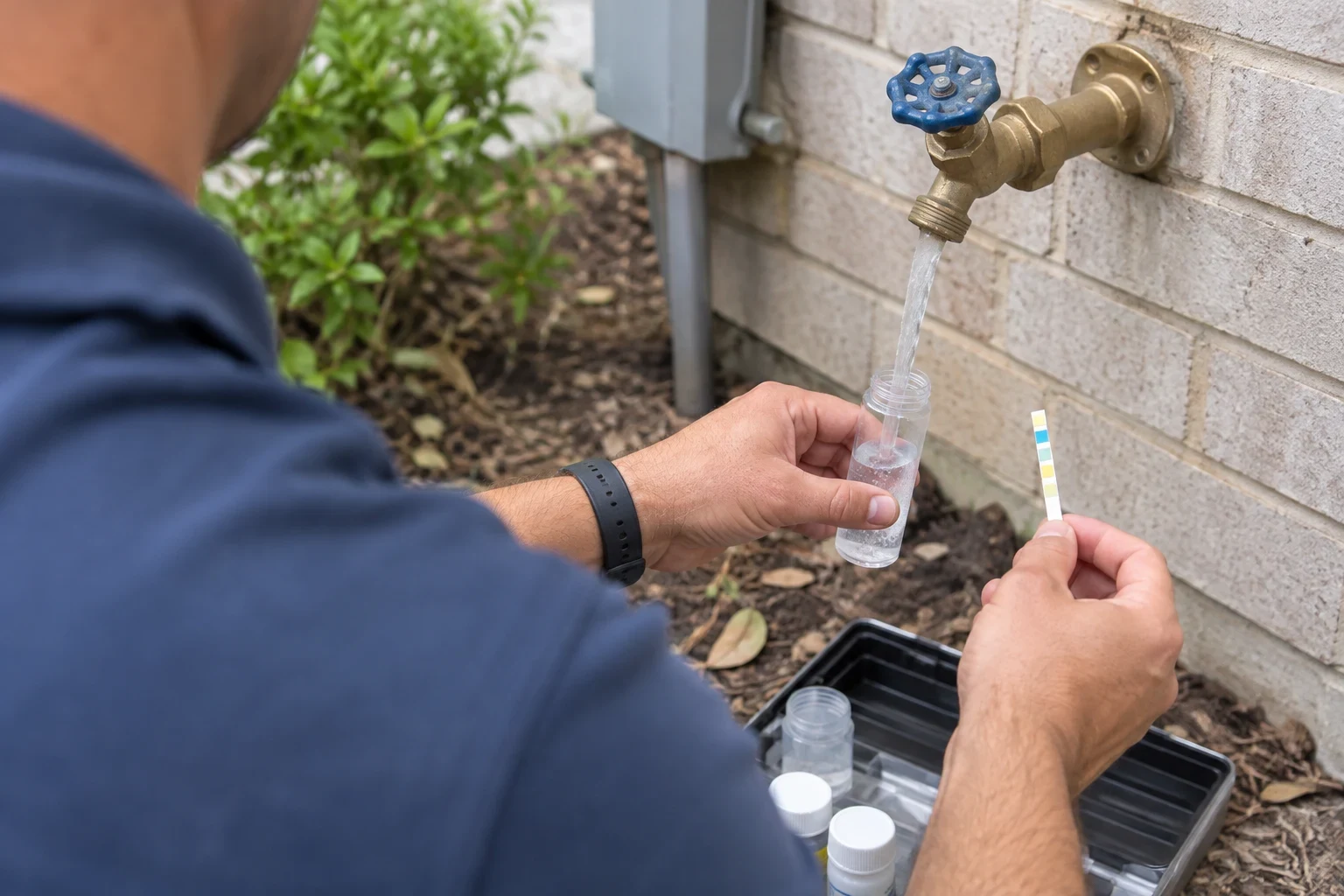
Testing your water
We check iron, manganese, hardness, pH, sulfur and bacteria. Our Water Testing page covers what each result means.
- 3
A plain-English recommendation
We walk through your numbers and explain which stage treats which problem. If a single filter is enough, that is what we recommend.
- 4
Installation at the pressure tank
We plumb in a bypass valve, mount the equipment, set the backwash schedule and flush the lines. Before we leave, we show you how to bypass the system and where each filter sits.
- 5
Service afterward
We offer full services after the sale, including filter and media changes and UV lamp replacement.
What moves the cost of well treatment
No two wells carry the same mix, so the price follows your test results rather than a set package. We offer free installation, and the system comes with a lifetime warranty. We go over the equipment line by line before any work starts.
- How many problems the test finds
- Sediment alone needs one stage. Iron, sulfur and bacteria together need three or more.
- Concentration levels
- Heavy iron or sulfur calls for a larger media tank or a stronger oxidizing method than light levels do.
- Flow rate and household size
- Equipment is sized to your well pump's output and peak use, so showers do not lose pressure.
- Space and plumbing at the tank
- Tight well houses, old galvanized lines or a missing drain for backwash water can add work.
Well water treatment questions
- Do I really need a test before buying equipment?
- Yes. Iron, manganese and tannins can all stain, and each needs a different media. Buying without a test is how people end up with a filter that does nothing for their actual problem.
- Will treatment lower my water pressure?
- Properly sized equipment causes very little pressure drop. Problems usually come from undersized tanks or clogged cartridges, which is why we size to your pump's flow and set a maintenance schedule.
- Does UV kill bacteria permanently?
- UV treats water as it passes the lamp; it does not disinfect the well itself. If a test shows contamination, the well may need shock chlorination as well, and we will explain when that makes sense.
- What maintenance does the system need?
- Sediment cartridges get changed as they load up, UV lamps are replaced on a yearly cycle, and the quartz sleeve gets cleaned. Backwashing filters mostly look after themselves, with media replaced after several years.
- What warranty comes with the system?
- Well water treatment equipment we install carries a lifetime warranty. We can go over the details when you call.
Find out what is in your well
Describe the stains, smell or grit you are seeing, and we will explain which tests make sense for your well. From there, we lay out what treatment would look like for your home, stage by stage.