ServicesWater Testing
Water Testing in Seabrook
Before anyone sells you a softener or a filter, you should know what is in your water. We test at your tap, write down every reading, and walk you through what each number means. Sometimes the answer is that you need nothing at all.
What a water test tells you
Water that left the treatment plant within federal limits can still change on the way to your glass. It picks up iron from old service lines, copper or lead from household plumbing, and taste from the disinfectant the utility adds. A test at your kitchen tap measures the water you actually drink, not the average across a city system.
We use the results to answer two plain questions: is anything in your water worth treating, and if so, which equipment fixes that specific problem. Hardness points toward a softener. Chlorine taste points toward carbon. Dissolved solids or plumbing metals point toward reverse osmosis. Matching the fix to a measured cause is how you avoid paying for equipment that does not address what bothers you.
For homes on private wells around Seabrook and nearby towns like San Leon and Bacliff, testing matters more. No utility is checking that water for you, so bacteria, nitrates and iron are the owner's responsibility.
What we check
Hardness in grains per gallon
Calcium and magnesium cause scale on fixtures, water heater elements and glass shower doors. We report hardness in grains per gallon, the unit softeners are sized in, so the number is useful and not just a label.
Iron and manganese
Even a fraction of a part per million of iron leaves orange stains in toilets and laundry. Manganese leaves black or brown marks. Both tell us whether a standard filter will work or an oxidizing filter is needed.
Chlorine or chloramine
Municipal water carries a disinfectant residual by design. We measure it at the tap, since the level and the type decide which carbon media will remove the taste and odor.
pH and total dissolved solids
Low pH water is corrosive to copper pipe and can cause blue-green staining. TDS is a quick read of everything dissolved in the water and helps us judge whether reverse osmosis makes sense for drinking water.
Lead and copper from plumbing
These metals usually come from solder, brass fittings and older pipe inside the house, not the source. Our sample is the very first water out of the tap after it has stood unused for hours, because that standing water has had the most contact with the metal and shows the highest level you would see.
Bacteria and nitrates for wells
For well owners we collect samples for coliform bacteria and nitrates and send them to an independent laboratory. These cannot be measured reliably with a strip in the kitchen.
Signs it is time to test
White crust on faucets and showerheads
Chalky buildup that scrubs off with vinegar is mineral scale. A hardness reading tells you whether it is mild enough to ignore or high enough to shorten the life of your water heater.
Orange, brown or black stains
Rust-colored rings in the toilet bowl or dingy whites after washing point to iron or manganese.
Pool smell or a flat, bitter taste
A strong chlorine odor, a metallic taste or a rotten-egg smell from hot water each have different causes. Testing separates them so you treat the right one.
An older house or new plumbing work
Homes with original galvanized or copper lines with lead solder are worth a lead and copper check, especially if young children or a pregnant family member live there.
You rely on a private well
Wells should be tested regularly, and again after flooding, a pump replacement or any change in color or smell.
How a test visit runs
- 1
We start on the phone
Describe what you see, smell or taste, let us know if your water comes from the city or a private well, and give us a rough age for the plumbing. Those answers tell us which tests are worth paying for.
- 2
Sampling at the right taps
We draw from the kitchen cold tap and, when it helps, from a bathroom or the point where water enters your home. For lead we ask you to leave the water unused for at least six hours beforehand.
- 3
On-site readings
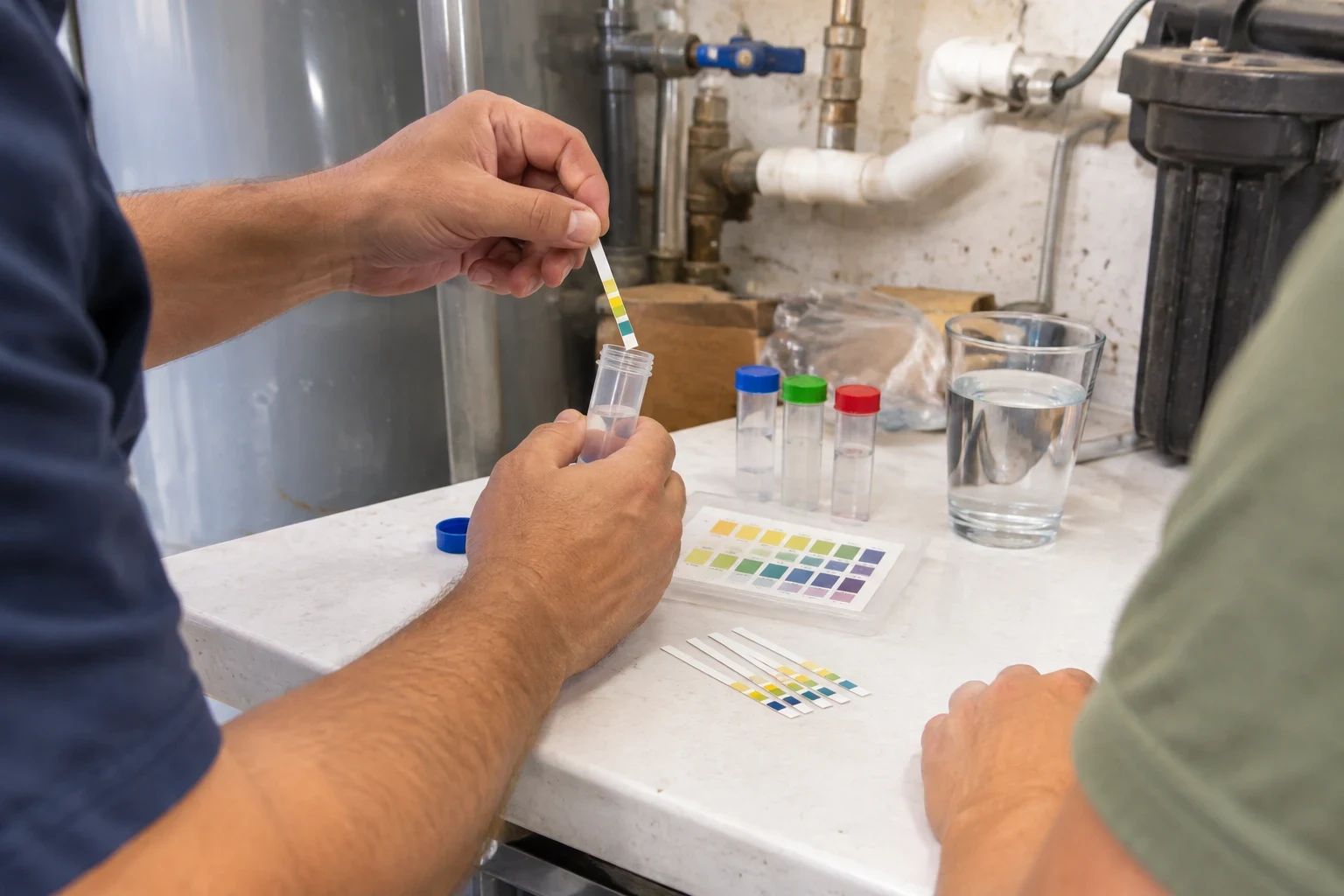
Our meters and reagent kits give values for hardness, iron, pH, dissolved solids and the disinfectant residual while you watch, and each one goes onto your results sheet. Samples that need a laboratory are sealed, labeled and shipped out.
- 4
Results explained line by line
We go through each number, what range it sits in and whether it matters for your home. If treatment makes sense, we explain which option fits and why, and if it does not, we say so.
What affects the cost of testing
A basic on-site panel and a full laboratory analysis are very different jobs, so the price depends on what you need answered. We tell you the cost of each test by phone before we schedule, and nothing is added on the day without your say.
- On-site versus laboratory
- Readings taken in your kitchen cost less than samples shipped to an outside lab. Bacteria, nitrates and low-level metals need the lab.
- City water or well
- Well water calls for a broader panel because no utility treats or monitors it. City water usually needs fewer tests.
- How many taps we sample
- A single kitchen sample is the quickest job. Comparing the incoming line against several fixtures takes more draws and more readings, which adds to the work.
- Follow-up testing
- A retest after equipment is installed, or a seasonal check on a well, is a separate visit.
Water testing questions
Something not covered here? (281) 699-8128
My city water meets federal standards. Why test it?
Utilities sample at the plant and at set points in the distribution system, not inside your house. Your service line, fittings and water heater can add metals or change how the water tastes. A tap test shows what actually reaches your glass, and it often confirms the water is fine.
Do I have to buy a system after the test?
No. The test exists to give you facts. If the numbers show nothing worth treating, we tell you that plainly and you keep the results.
When will I see my results?
The on-site readings are finished at your sink, so you have values for hardness, pH, dissolved solids, iron and the disinfectant residual before we leave. Lab panels for bacteria, nitrates or trace metals take longer, and the wait depends on which tests were ordered. When the lab report arrives, we phone you and go through it.
How often should a well be tested?
Common public health guidance is at least once a year for bacteria and nitrates. Test again after flooding, well repairs or any sudden change in taste, color or smell.
What happens if the results point to treatment?
We tie each reading that matters to the equipment built for that cause. High hardness leads to a water softener, chlorine taste leads to whole-home filtration with carbon, and plumbing metals or high dissolved solids in drinking water lead to reverse osmosis. Installation is free, we provide full services after the sale, and the equipment is backed by a lifetime warranty.
Know your numbers first
One visit gives you written readings and a straight explanation of what they mean for your home. Tell us what you are seeing and we will suggest which tests to run.