ServicesWater Softeners
Water Softeners in Seabrook
A softener only makes sense when your water is actually hard. We measure it first, then size a resin tank and control valve to your hardness and how many people live in your home. If the numbers don't support a softener, we tell you.
What a Softener Does, and When It's the Right Call
Hard water contains dissolved calcium and magnesium. Heat it or let it evaporate and those minerals come out of solution as scale. You see it as white crust on a showerhead and haze on glassware, and you don't see it building up inside a tank water heater. A softener pulls those minerals out before the water reaches your pipes and appliances.
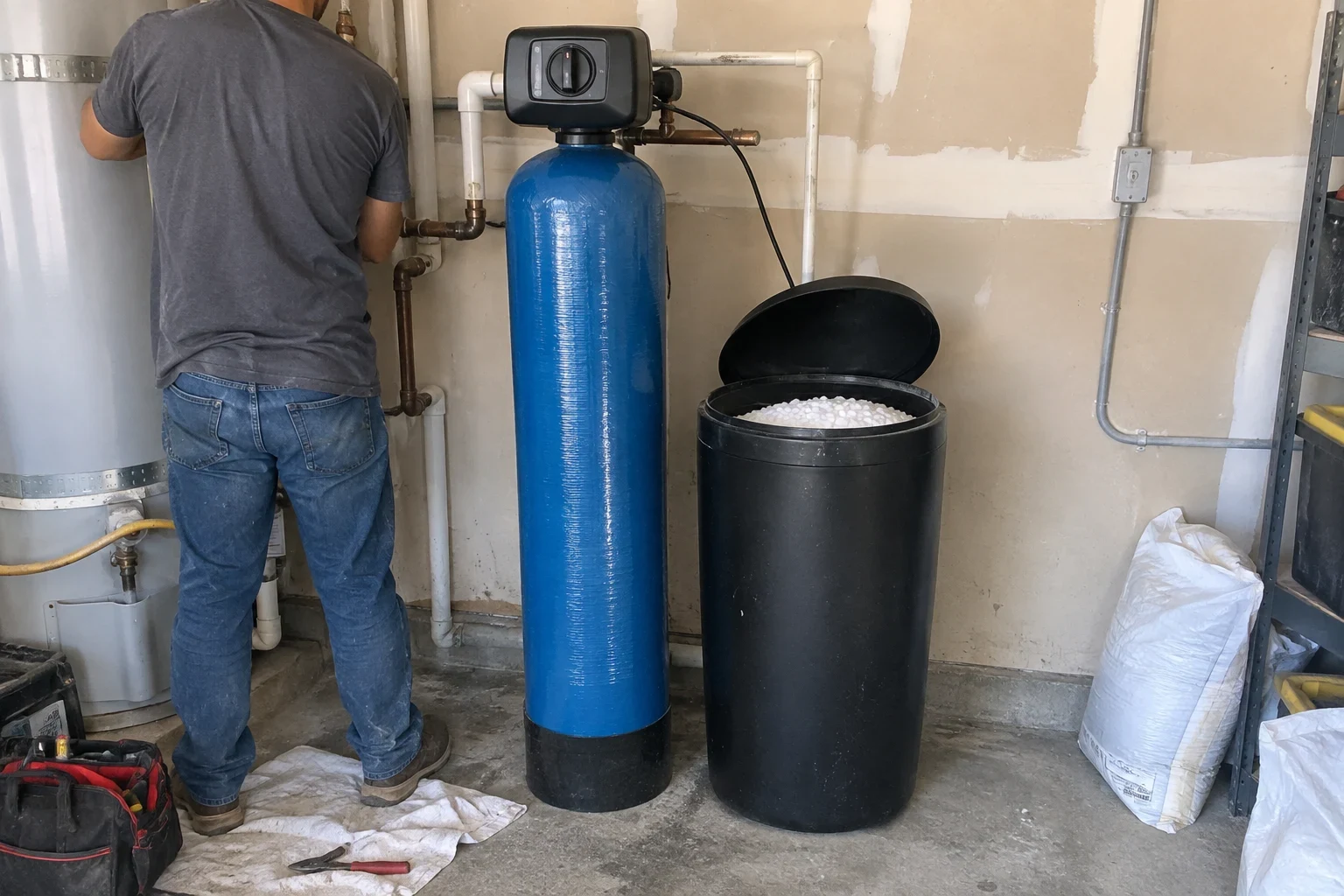
The process is called ion exchange. Inside the main tank sit resin beads loaded with sodium or potassium ions. As water flows past, calcium and magnesium cling to the beads, and sodium or potassium goes into the water to take their place. Once the beads are saturated, the control valve flushes them with salty water drawn from the brine tank. That knocks the hardness minerals loose, sends them down the drain and leaves the resin ready to work again.
Softening does nothing for chlorine, taste or lead. Whole-home filtration or reverse osmosis handles those. So we begin with a measured hardness number in grains per gallon and explain what it means for your home before suggesting any equipment.
What Our Softener Installation Includes
A hardness reading first
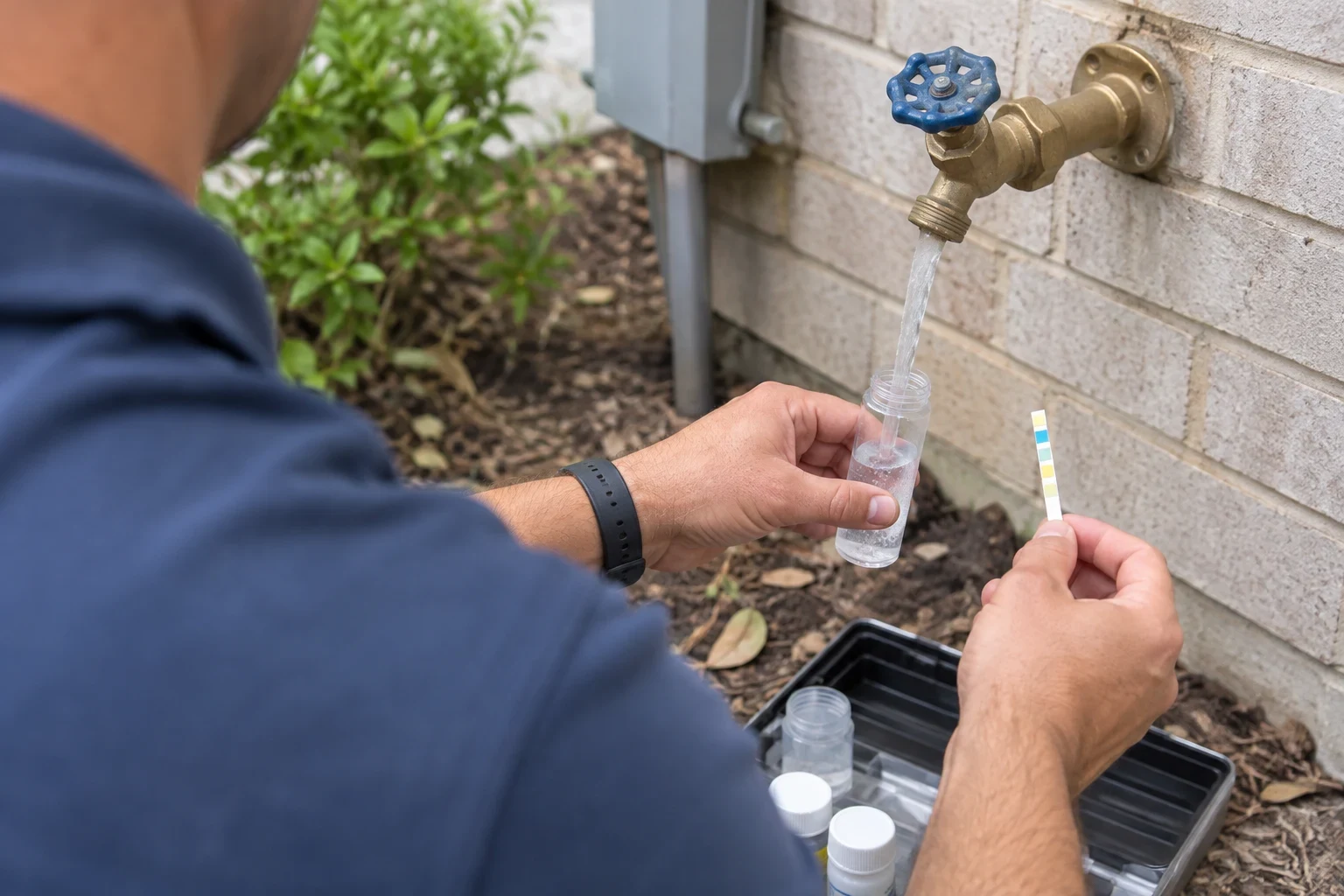
We test your water right in your home and show you the reading in grains per gallon. For a broader look that includes iron and other minerals, our water testing service goes further.
Sizing by grains, not guesswork
We size the unit by multiplying your hardness by daily use, figured at about 75 gallons per person. Too little resin forces the valve to recharge constantly and burn through salt. Too much leaves beads unused, and water can carve channels through them instead of flowing evenly.
Metered control valve
A demand-based valve tracks the actual gallons passing through and recharges the resin only when it is close to full. Compared with a timer on a fixed schedule, it uses less salt and less water.
Bypass valve and drain connection
A bypass lets water keep reaching your taps while the unit is being serviced. We give the drain line a proper air gap so discharge water has no path back into the system.
Setup and a walkthrough
We program the valve to your hardness, load the brine tank and show you how to add salt and read the level. Free installation and full services after the sale come with every system we install.
What Hard Water Leaves Behind in Your Home
- Chalky buildup on fixtures
- The gritty deposits that collect on aerators, showerheads and tub spouts are calcium carbonate, left behind each time a film of water evaporates.
- Cloudy glasses after every wash
- When spotting comes back no matter which detergent you buy, dissolved minerals drying on the glass are the more likely culprit.
- Soap that barely suds
- Calcium and magnesium bind with soap and shampoo, so you use more to work up a lather and a residue lingers on skin and hair.
- Popping from the water heater
- Scale settles on the bottom of a tank heater and traps small pockets of water underneath. When that water turns to steam and breaks through, it makes a popping sound, and the burner runs longer to bring the tank up to temperature.
- Rough, graying laundry
- Minerals hold detergent residue inside the fabric, which leaves towels scratchy and slowly dulls whites to gray.
How a Softener Install Goes
- 1
Test and explain
We measure hardness and talk through what the number means. If your water is soft enough that a softener won't pay off, we say so and point you toward the option that fits.
- 2
Pick the location
The softener goes where the main water line enters, often in the garage, with room for the brine tank and a nearby drain. We check for an outlet for the control valve.
- 3
Plumb it in
We shut off the main, cut in the bypass loop and connect the resin tank so all household water passes through it. Outdoor hose bibs can be left on hard water to save salt.
- 4
Program and test
We set the valve for your hardness and household size, run a first regeneration and test the treated water to confirm it reads soft.
Why Softener Costs Vary From Home to Home
Two homes rarely share the same hardness reading or the same daily water use, so the right softener differs too. Because installation is free, most of what you pay is for equipment matched to your numbers. Before anything is ordered, we go over each line with you by phone.
- Grain capacity
- More resin is needed when water is harder or more people live in the house. This is usually the largest part of the cost.
- Valve type
- A metered valve that regenerates on demand costs more at the start than a simple timer valve, but it burns through less salt year after year.
- Pretreatment needs
- When a test turns up iron or sediment, a prefilter ahead of the softener may be required so the resin beads don't get coated and stop working.
- Plumbing at the main line
- If a softener loop is already in place, hookup is quick. Extra pipe to reach the main or a drain means more material.
Water Softener Questions
- Do I really need a softener?
- Often you don't. Plenty of homes have water that is only mildly hard, and softening it changes very little you can see or feel. We take a hardness reading first and recommend a softener only when the number supports it.
- Will softened water taste salty?
- In most homes, no. The sodium added matches the hardness taken out, so moderately hard water picks up only a small amount. You can use potassium chloride instead of salt, and a reverse osmosis unit under the kitchen sink gives you low-sodium water for drinking and cooking.
- How often will I add salt?
- It comes down to three things: how hard your water reads, how many gallons your household runs each day and how big the brine tank is. With a metered valve, most families check the brine tank about once a month and top it off when it drops below half. We also show you how to find a salt bridge, a hardened layer near the top that keeps the salt underneath from dissolving.
- Will a softener get rid of chlorine taste or smell?
- It won't. Ion exchange targets calcium and magnesium and passes chlorine straight through. Whole-home filtration with activated carbon handles chlorine taste and odor, and it can sit on the same line as a softener.
- Is there a warranty on the softener?
- Yes. Every water softener we install comes with a lifetime warranty. When you call, we can walk you through what it covers.
Find Out If a Softener Fits Your Water
We'll talk through what you're seeing at the tap, explain how hardness is measured and set up a time to test your water at home.